
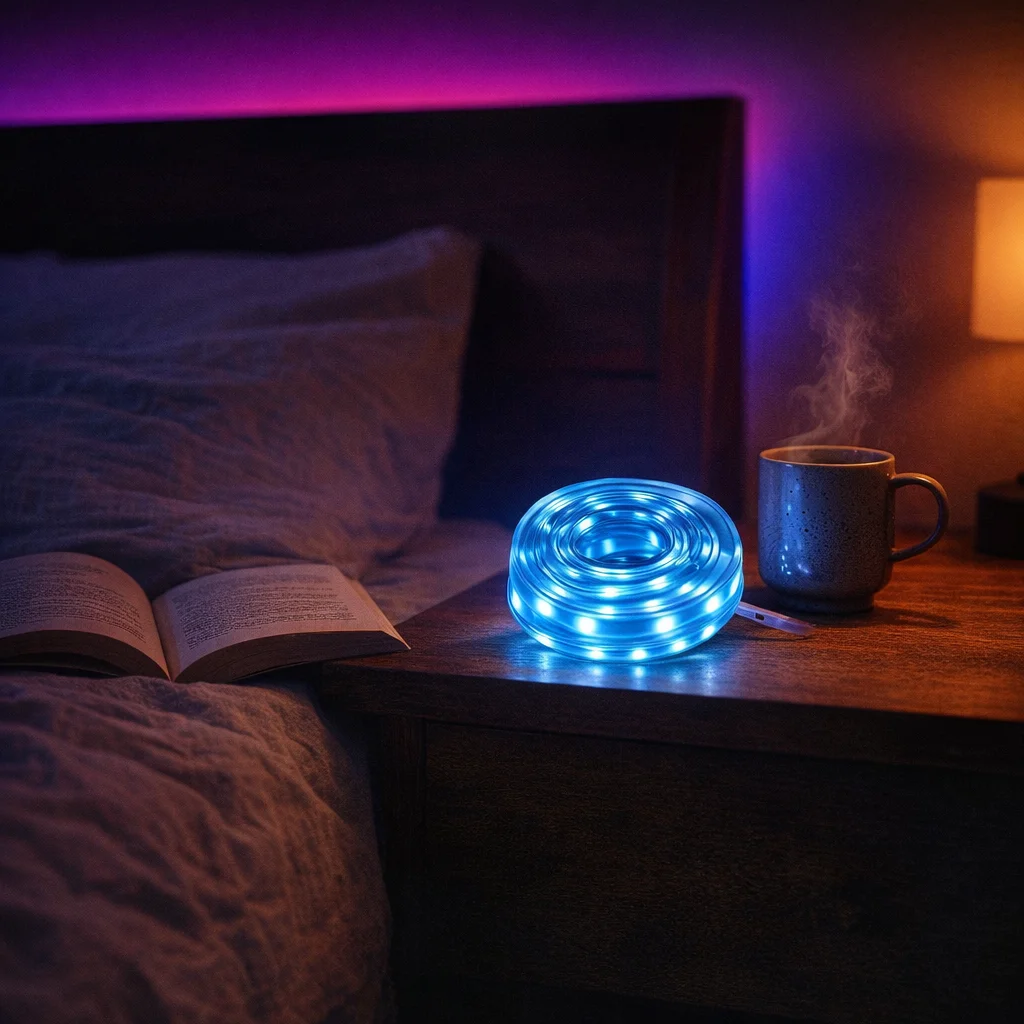
Learning how to install LED strip lights for bedroom spaces is one of the easiest ways to completely transform the mood, atmosphere, and personality of a room without a renovation or a big budget. Whether you want soft, dreamy backlighting behind your headboard, a vibrant gaming setup glow, or a cozy ambient hue that makes your bedroom feel like a boutique hotel, LED strip lights are the answer.
The good news? You do not need an electrician, a toolbox, or any prior experience. This guide walks you through everything from planning your layout to switching on your lights for the first time, with tips that will save you from the most common mistakes people make.
Why LED Strip Lights Are Perfect for Bedrooms
Bedrooms are personal spaces. They are where you wake up, wind down, and spend some of the most private hours of your day. The lighting in that space has an enormous impact on how you feel, how well you sleep, and how much you actually enjoy being in the room.
Traditional overhead lighting is harsh, flat, and frankly a little uninspiring. LED strip lights solve that problem by adding layered, ambient illumination that you can control down to the exact shade and brightness you want. They sit quietly in the background, doing their job without drawing attention to themselves, while completely changing how the room feels.
The Mood Difference Is Real
There is a reason interior designers talk about "lighting layers." A room with only one light source, usually a ceiling fixture, feels flat and clinical. When you add a secondary light source at a lower level, like strips behind a headboard or under a bed frame, the room instantly feels warmer, more dimensional, and more intentional.
Think about the difference between a hospital waiting room and a boutique hotel suite. The furniture might be similar. The difference is almost always the lighting.
They Work for Every Bedroom Style
LED strip lights have a reputation for being a "gamer aesthetic" thing, and yes, they are incredible for that. But they are just as beautiful in a minimalist Scandinavian bedroom, a cozy boho retreat, or a sleek modern space. The key is in how and where you place them, and which colors you choose to run.
A warm white glow behind a headboard looks elegant and timeless. A soft purple under a bed frame creates a floating effect that feels almost cinematic. The same product, completely different results.
They Are Genuinely Affordable
Unlike smart home lighting systems that can cost hundreds of dollars to set up, LED strip lights for bedrooms are one of the most budget-friendly upgrades you can make. For a relatively small investment, you can transform the entire feel of a room in an afternoon.
Planning Your LED Strip Light Installation
The difference between a professional-looking result and a messy one almost always comes down to planning. Spend ten minutes thinking through these decisions before you buy anything, and you will save yourself a lot of frustration later.
Measure Your Space Carefully
Walk around your bedroom and think about where you want the lights to go. Common placements include behind the headboard, along the ceiling perimeter, under the bed frame, along shelving, or behind a TV or monitor. For each location, measure the total length of the surface you want to cover.
Add those measurements together and then add a little extra. It is always better to have more strip than you need and cut it to size than to come up short. Most quality LED strips have designated cut points marked along the strip, making this easy to do cleanly.
Pro Tip: Always measure twice. Corners and curves add length that is easy to underestimate when you are eyeballing a space. A few extra feet of strip costs very little compared to the frustration of running short mid-install.
Decide on Your Placement Strategy
There are two main approaches to placing LED strips in a bedroom. The first is hidden placement, where the strip itself is not visible and only the glow is seen. This creates a soft, diffused halo effect and looks very high-end. The second is visible placement, where the strip is part of the aesthetic, like along the edges of a headboard or across the back of a desk.
Hidden placement works best behind furniture, inside ceiling coves, or tucked under bed frames. Visible placement works best when the strip itself is part of a deliberate design choice, like outlining a geometric shape on a wall or framing a mirror.
Think About Power Access
LED strip lights need to plug into a power source. Before you commit to a placement, check where the nearest outlet is and whether the power cord can reach it discreetly. Running a visible cord across a wall or floor will undermine the effect of even the most beautiful installation.
In most bedrooms, there is an outlet near the bed or along the baseboard. Plan your strip placement so that the controller end of the strip is closest to that outlet. If needed, a short extension cord tucked behind furniture is a perfectly acceptable solution.
What You Need Before You Start
One of the best things about installing LED strip lights is how minimal the tool list is. You do not need anything exotic. Here is what to gather before you begin.
Your Supplies
- Your LED strip lights (more on choosing the right ones below)
- A clean, dry cloth or paper towel
- Rubbing alcohol (isopropyl alcohol works perfectly)
- A tape measure
- A pair of scissors
- Optional: small binder clips or painter's tape to hold strips in place temporarily while you position them
That is genuinely the entire list. The adhesive backing on quality LED strips is strong enough that no additional mounting hardware is needed for most surfaces. The alcohol is used to clean the surface before you stick the strip down, which dramatically improves how well the adhesive bonds.
Choosing the Right Strip Lights
Not all LED strip lights are created equal. For a bedroom, you want a strip that offers a wide range of colors including warm whites, that has app control so you can change settings without getting out of bed, and that is long enough to cover your planned placement in one continuous run.
The Stripely RGB LED Strip Lights are a great starting point. They come in multiple lengths to suit any bedroom size, connect to an app for full color and brightness control, and include a remote as a backup. The fact that they are flexible and cuttable makes them adaptable to almost any space.
Surface Compatibility
LED strip adhesive works best on smooth, clean, non-porous surfaces. Painted drywall, wood furniture, plastic, metal, and glass all work well. Rough brick, textured wallpaper, or unfinished wood can be problematic because the adhesive cannot make full contact with an uneven surface.
If you need to mount strips on a tricky surface, mounting clips (small plastic brackets that screw into the surface and hold the strip) are a cheap and effective solution available at any hardware store.
How to Install LED Strip Lights for Bedroom Step by Step
Now for the main event. Follow these steps in order and your installation will go smoothly from start to finish. This process applies whether you are doing a simple headboard installation or a full room perimeter.
Step 1: Clean Your Surface
This step is the one most people skip, and it is the reason so many LED strips start peeling off within a few weeks. Dust, skin oils, and residue from cleaning products all prevent adhesive from bonding properly.
Dampen your cloth with rubbing alcohol and wipe down the entire surface where your strip will go. Let it dry completely before moving on. This takes about two minutes and makes a significant difference in how long your installation lasts.
Step 2: Measure and Cut Your Strip
Hold the strip up to your surface and mark where it needs to be cut. Look closely at the strip and you will see small copper contact points or scissor icons at regular intervals along its length. These are the designated cut points. You must cut at these points only, not between them, or you risk damaging the circuit and losing a section of lights.
Use a clean, sharp pair of scissors and cut straight across at the marked point. A clean cut ensures the strip will function correctly right up to the end.
Key Takeaway: Never cut between the marked cut points on an LED strip. Cutting at the wrong place can permanently disable a section of your lights. When in doubt, cut slightly longer and test before trimming further.
Step 3: Plan Your Corner Strategy
If your installation goes around corners, like along the perimeter of a ceiling or around a headboard frame, you have two options. The first is to bend the strip gently around the corner, which works for gradual curves. The second is to cut at a corner, connect an extension cable or connector clip, and continue the strip on the next surface.
For sharp 90-degree corners, the connector clip method gives a cleaner result. Bending a strip at a sharp angle can stress the circuit and cause that section to fail over time.
Step 4: Do a Dry Run First
Before you peel off any adhesive backing, do a complete dry run. Hold the strip up to the surface, plug it in, and turn it on. This lets you confirm the placement looks right, the cord reaches the outlet, and all sections of the strip are working correctly.
This is also the moment to check that you are happy with the color and brightness. Adjust the app settings or remote until you find a look you love. It is much easier to change your mind now than after the strip is stuck down.
Step 5: Peel and Stick
Starting from the end closest to your power outlet, peel back a few inches of the adhesive backing and press the strip firmly against the surface. Work your way along slowly, peeling and pressing in sections rather than all at once. This gives you much more control and prevents the strip from sticking in the wrong place.
Press firmly along the entire length of the strip for a few seconds after placing it. The adhesive bonds better with pressure and warmth from your hands.
Step 6: Connect and Power On
Connect the strip to the controller, plug the controller into your outlet, and power on. If you are using an app-controlled strip like the ones from Stripely, download the companion app and follow the pairing instructions. This usually takes less than two minutes and gives you full control over color, brightness, speed of effects, and scheduling right from your phone.
Walk around the room and look at the effect from different angles. Adjust the positioning of any sections that are not sitting flat, and you are done.
Creative Placement Ideas for Maximum Impact
Now that you know how to install LED strip lights for bedroom spaces, let's talk about where to put them for the most dramatic and beautiful results. These are the placements that consistently get the most attention and compliments.
Behind the Headboard
This is the most popular bedroom placement for good reason. Running a strip along the back edge of your headboard, between the headboard and the wall, creates a gorgeous halo of light that makes the entire bed feel like a centrepiece. The effect is especially beautiful with a warm white or soft amber color.
For a floating headboard, mount the strip along the bottom edge and the light will pool softly on the wall behind it. For a headboard that sits against the wall, run the strip along the top edge and angle it slightly toward the wall for a more diffused glow.
Under the Bed Frame
Underlighting a bed creates a floating effect that looks genuinely stunning and requires almost no effort to install. Run the strip along the inside of the bed frame, facing downward, and the light will pool on the floor beneath the bed in a soft, even circle.
This placement also serves a practical purpose. A gentle glow under the bed is the perfect nightlight for navigating a dark room without turning on harsh overhead lights and disrupting your sleep.
Ceiling Perimeter or Cove
If your bedroom has a cove ceiling or even just a standard flat ceiling with crown molding, running LED strips along the top of the molding facing upward creates an indirect lighting effect that makes the ceiling glow. This is the closest you can get to a professional architectural lighting effect without any construction.
For a standard bedroom without crown molding, a simple strip along the top of the walls, tucked just below the ceiling line, creates a similar effect. Use a color that complements your wall color for a cohesive, designer look.
Behind a TV or Monitor
Bias lighting, which is the practice of placing light behind a screen, reduces eye strain during long viewing sessions and makes colors on screen appear more vibrant. It is a well-established technique among filmmakers and designers, and it looks incredible.
Run a strip around the perimeter of the back of your TV or monitor and set it to a neutral white or a color that matches your on-screen content. Many app-controlled strips, including the Stripely RGB LED Strip Lights, have music sync and scene modes that make this even more immersive.
Troubleshooting Common Problems
Even with a careful installation, things occasionally go sideways. Here are the most common issues people run into and how to fix them quickly.
The Strip is Peeling Off the Wall
This almost always comes down to surface preparation. If the strip is peeling, carefully remove it, clean the surface thoroughly with rubbing alcohol, let it dry completely, and reapply. If the surface is textured or porous, use mounting clips instead of relying on the adhesive alone.
Temperature also matters. In very cold rooms, adhesive bonds less effectively. If your bedroom gets cold, press the strip firmly and hold it in place for a full minute at each section to help the bond form.
Some Sections of the Strip Are Not Lighting Up
If a section of your strip is dark, the most common cause is a cut made at the wrong point. Check where the dark section begins and look for a cut or a sharp bend. If the strip was cut between contact points, that section is permanently disabled and the strip will need to be replaced from that point forward.
If the strip has never been cut but a section is still dark, check all connector clips and make sure they are seated firmly. A loose connection is often the culprit.
The Colors Look Wrong or Inconsistent
If your strip is showing the wrong colors or flickering, check the connection between the strip and the controller. A loose connection can cause color channels to drop out, making the strip look pink instead of white, or green instead of yellow.
Also check your app settings. Some controller apps have a color calibration or white balance setting that can shift the overall color if accidentally adjusted. Resetting the controller to factory defaults usually resolves this instantly.
The App Will Not Connect
Bluetooth-based LED strip apps typically require you to be within a reasonable range of the controller. If your phone is not connecting, make sure you are in the same room, that Bluetooth is enabled, and that you have granted the app location permissions (required for Bluetooth scanning on most phones).
If the strip uses a Wi-Fi connection instead of Bluetooth, make sure your phone is on the same network as the controller, typically a 2.4GHz network rather than 5GHz.
Frequently Asked Questions
Can I cut LED strip lights to any length I want?
You can cut LED strip lights, but only at the designated cut points marked along the strip, usually indicated by a dotted line or small scissor icon. Cutting between these points will damage the circuit and permanently disable that section of the strip. Most strips have cut points every few inches, giving you a lot of flexibility in your final length.
How do I hide the LED strip wire and controller?
The most effective approach is to plan your installation so the controller end of the strip is closest to the outlet, minimizing the amount of visible cord. From there, you can tuck the cord behind furniture, run it along the baseboard, or use adhesive cable clips to keep it flat against the wall. For ceiling installations, the cord can often be tucked into the gap between the wall and ceiling trim.
Are LED strip lights safe to leave on overnight?
Quality LED strip lights run cool and are generally safe to leave on for extended periods. Unlike incandescent bulbs, they do not generate significant heat during normal operation. That said, it is good practice to turn them off when you leave the room for long periods. App-controlled strips make this easy since you can set schedules and timers so the lights turn off automatically after you fall asleep.
Can I reconnect LED strip lights after cutting them?
Yes. LED strip connector clips are widely available and allow you to join two cut sections of strip together, extend a strip with a cable, or navigate around corners. These clips are inexpensive and require no soldering. Just make sure the connector you buy matches the width and pin configuration of your specific strip.
What is the best color for bedroom LED strip lights?
It depends on the mood you are going for. Warm whites and soft ambers create a relaxing, cozy atmosphere ideal for winding down before sleep. Cool whites and blues feel more energising and work well for a workspace or reading area. For ambiance and personality, soft purples, teals, and pinks are popular choices that look beautiful without being overwhelming. The best part of an app-controlled strip is that you can change the color to match your mood in seconds.
Ready to Transform Your Bedroom?
Installing LED strip lights in your bedroom is one of those rare home upgrades that looks expensive, feels dramatic, and costs surprisingly little. Once you have done it once, you will wonder how you ever lived without them.
The process is straightforward: measure your space, clean your surfaces, do a dry run, peel and stick, and connect your app. From start to finish, most bedroom installations take under an hour. The result is a room that feels custom, intentional, and genuinely beautiful.
If you are ready to get started, the Stripely RGB LED Strip Lights are a fantastic choice for any bedroom project. They come in multiple lengths to fit any space, offer full app control for easy color and brightness adjustments from your phone, and include a remote for those moments when your phone is out of reach. The flexible design makes them easy to work with around corners and curves, and the adhesive backing is strong enough to stay put for years with proper surface preparation.
Your bedroom should feel like a space that reflects who you are. A few feet of LED strip light might just be the thing that gets it there.