
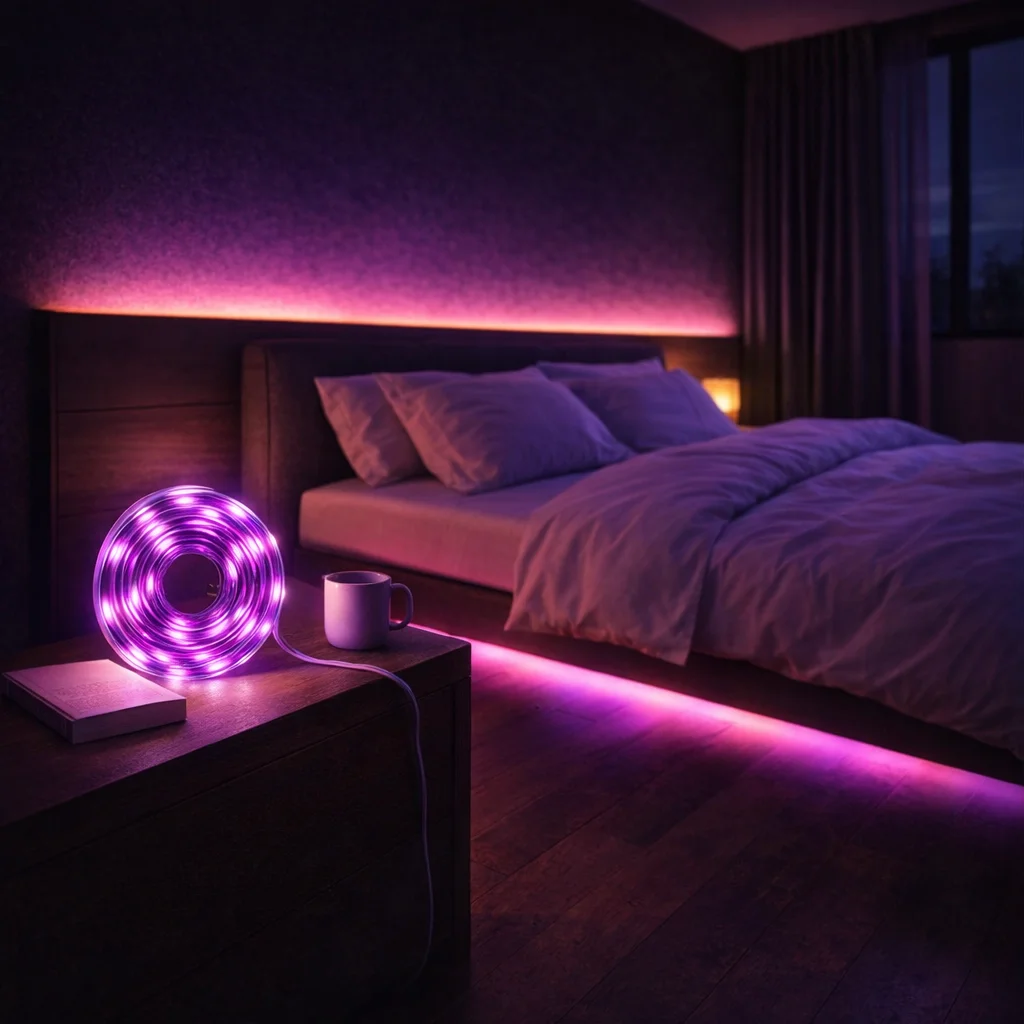
If you've ever scrolled through a beautifully lit bedroom on social media and thought, "How do they do that?", the answer is almost always LED strip lights for room ideas done right. These flexible ribbons of light have quietly become one of the most powerful tools in home decoration, turning ordinary bedrooms, living rooms, and gaming setups into spaces that feel intentional, immersive, and genuinely exciting to be in.
This guide covers everything you need to know, from choosing the right lighting placement to creating moods you didn't think were possible in a rental apartment. Whether you're starting from scratch or looking to upgrade what you already have, you'll leave here with a clear plan and plenty of inspiration.
Table of Contents
- Why LED Strip Lights Are a Game-Changer for Room Decor
- Bedroom LED Strip Light Ideas That Actually Work
- Living Room Lighting Transformations with LED Strips
- Gaming and Desk Setups: Building the Perfect Atmosphere
- Where to Place LED Strip Lights for Maximum Impact
- Choosing Colors and Moods for Every Moment
- Installation Tips for a Clean, Professional Look
- Frequently Asked Questions
Why LED Strip Lights Are a Game-Changer for Room Decor
There's a reason interior designers, content creators, and everyday homeowners have all landed on LED strip lights as their go-to decorating tool. They do something that almost no other affordable product can: they change how a room feels, not just how it looks.
Standard overhead lighting flattens a room. It washes everything out and leaves no sense of depth, warmth, or personality. Strip lights work differently. They add layers to your space, creating dimension behind furniture, under shelves, and along architectural edges that you never noticed before.
The Transformation Is Immediate
Most home upgrades take time to show results. Paint needs to dry, furniture needs to be assembled, plants need to grow. LED strip lights deliver an instant transformation. You peel, stick, and power on, and the room you've lived in for years suddenly looks like somewhere new.
That immediate payoff is part of what makes them so addictive. You'll find yourself experimenting with colors and placements long after the initial setup because the creative possibilities don't run out.
They Work in Every Kind of Space
One of the biggest misconceptions about LED strip lights is that they're only for gaming rooms or teenager bedrooms. In reality, the same product that creates a neon-soaked gaming den can also produce the softest, most relaxing warm glow for an adult bedroom or a sophisticated backlight for a living room TV wall.
The light itself is neutral. What you do with color, brightness, and placement is what defines the final look. That flexibility is rare in home decor at any price point.
Affordable Doesn't Mean Cheap-Looking
Budget-friendly lighting used to mean obvious, plasticky results. That's no longer the case. Modern LED strip lights, when placed thoughtfully, produce results that look genuinely expensive. The secret is in the placement, which we'll cover in detail later in this guide.
Expert Tip: The goal with LED strip lights is to see the light, not the source. When the strip itself is hidden and only the glow is visible, the effect looks high-end regardless of what you paid.
Bedroom LED Strip Light Ideas That Actually Work
The bedroom is where most people start their LED strip light journey, and for good reason. It's your most personal space, the one you control entirely, and the one where lighting has the most direct impact on how you feel. Good bedroom lighting can make you sleep better, wake up more gently, and feel genuinely excited to spend time in your own room.
Behind the Bed Headboard
Running LED strips along the back of your headboard or along the wall directly behind your bed is one of the most popular placements for a reason: it works every time. The glow frames the bed like a halo, making the whole room feel more intentional and designed.
For this placement, warm tones like amber, soft white, or a gentle rose work beautifully. They create a cozy, winding-down atmosphere that signals to your brain that it's time to relax. If your headboard sits a few inches from the wall, the glow diffuses even more softly, which is the ideal result.
Under the Bed Frame
Under-bed lighting is one of those ideas that sounds subtle but completely changes the feel of a room. A soft glow emanating from beneath the bed frame makes the furniture appear to float, adding a modern, almost futuristic quality to even the most basic bed frame.
This placement also has a practical bonus: it acts as a gentle night light. Instead of fumbling for a lamp switch at 2am, you have a soft ambient glow that's easy on the eyes and won't fully wake you up.
Along Ceiling Coves and Shelves
If your bedroom has shelving, a wardrobe with a top ledge, or any kind of architectural detail near the ceiling, that's prime territory for LED strip lights. Running strips along the top of a wardrobe pointed upward creates a beautiful indirect glow that bounces off the ceiling and fills the room with soft, even light.
This technique is called cove lighting, and it's a staple of professional interior design. With LED strips, you can achieve the same result for a fraction of the cost of a custom installation.
Living Room Lighting Transformations with LED Strips
The living room presents more creative opportunities than any other space in the home, simply because it has more surfaces, more furniture, and more architectural variety to work with. LED strip lights for room ideas in the living room tend to be the most dramatic, because this is the space where you host people and where first impressions happen.
TV Backlighting: The Bias Lighting Effect
Placing LED strips behind your television is one of the most impactful things you can do for both aesthetics and eye comfort. The glow behind the screen reduces the harsh contrast between the bright display and the dark wall around it, which actually makes extended viewing sessions easier on your eyes.
Beyond the practical benefit, a glowing TV wall looks genuinely cinematic. When the lights are synced to match the colors on screen, the effect is immersive in a way that feels far more premium than the setup cost would suggest. Products like the Stripely RGB LED Strip Lights with app control make this kind of dynamic color syncing simple to set up and endlessly customizable.
Along Architectural Features
Crown molding, exposed beams, built-in bookshelves, fireplace mantels: any architectural feature in your living room becomes a focal point when it's outlined with a subtle LED glow. The key is to use the strip to trace the edge of the feature, not to illuminate the feature itself directly.
Think of it like this: you're not spotlighting the bookshelf, you're creating a halo around it. That distinction is what separates a thoughtful installation from one that looks like a first attempt.
Staircase and Hallway Accents
If your living room connects to a staircase or hallway, this is one of the most dramatic places to use LED strips. Running lights along the underside of each stair tread creates a cascading glow effect that looks genuinely architectural.
Hallways benefit from strips placed low along the baseboard or high along the ceiling edge. Both approaches add depth to what is typically the most neglected space in a home.
Gaming and Desk Setups: Building the Perfect Atmosphere
Gaming and work-from-home setups have elevated LED strip lights from a novelty to a near-essential component. The right lighting setup doesn't just look good on camera. It genuinely changes how energized and focused you feel during long sessions.
Behind the Monitor or Monitor Array
The same bias lighting principle that works for TVs applies to monitors, arguably even more so. Hours of staring at a bright screen in a dark room causes significant eye strain. A soft backlight behind your monitor reduces that strain while simultaneously making your setup look like something out of a professional streaming studio.
For gaming setups, cooler tones like blue, purple, or cyan tend to feel energizing and on-brand with the gaming aesthetic. For work setups, a softer white or warm tone keeps things professional without sacrificing the ambient depth that makes a dedicated workspace feel intentional.
Under the Desk and Along the Desk Edge
Running LED strips along the underside of your desk creates a floating effect similar to the under-bed technique. The glow pools on the floor beneath you and creates a defined, immersive zone that feels separate from the rest of the room.
Adding strips along the back edge of the desk surface, pointed at the wall, creates a second layer of ambient light that fills in the shadows behind your monitor. The combination of under-desk and back-desk lighting is the standard approach for setups that look polished in photos and videos.
Along Shelving and Peripheral Zones
Gaming shelves filled with collectibles, controllers, and accessories come alive when lit from behind or below. The lighting draws attention to the items on display and creates a sense of curation, as if each item was deliberately placed and deserves to be seen.
Using a product with full RGB color control means you can shift the entire palette of your setup with a few taps. Going from a deep blue study session to a vibrant purple streaming setup takes seconds with app-based control.
Where to Place LED Strip Lights for Maximum Impact
Placement is everything. The same strip light product can look breathtaking or amateurish depending entirely on where and how it's positioned. This section covers the principles that professionals use to make lighting look intentional rather than tacked-on.
The Rule of Hidden Sources
The single most important principle in decorative lighting is this: hide the source, show the light. When you can see the actual LED strip, the effect is diminished. When the strip is tucked behind a ledge, inside a channel, or facing a wall, and all you see is the resulting glow, the effect is magical.
Before you stick anything down, ask yourself: will the strip itself be visible from the main viewing positions in this room? If the answer is yes, adjust the placement until it isn't. Even moving a strip an inch further back on a shelf can make the difference between a visible strip and a beautiful ambient glow.
Height and Eye Line Considerations
Where you place lights vertically in a room has a significant psychological effect. Lights placed near the ceiling draw the eye upward and make rooms feel taller. Lights placed low, near the floor or under furniture, create a grounding, intimate atmosphere.
For most bedrooms, a combination of both works best: something near the ceiling for ambient fill and something low for warmth and coziness. For living rooms, ceiling-level placement tends to be more versatile because it works for both relaxed evenings and social gatherings.
Corners and Transitions
LED strips are flexible, which means they can follow corners and curves that rigid light fixtures cannot. This makes them ideal for wrapping around the inside of a window frame, following the curve of an archway, or tracing the corner where two walls meet.
Corner placements are particularly effective because the light bounces off two surfaces simultaneously, creating a much wider spread of ambient light than a straight run would produce. If you're working with a long strip like the Stripely 10m or 20m LED strip, corners are a great way to use the extra length productively rather than cutting it short.
Choosing Colors and Moods for Every Moment
One of the most underappreciated aspects of RGB LED strip lights is how dramatically different a room can feel simply by changing the color. The furniture hasn't moved. The walls are the same. But the entire emotional character of the space shifts based on the light you choose.
Warm Tones for Relaxation and Sleep
Warm colors, ambers, soft whites, and gentle oranges, signal to your body that it's time to wind down. This isn't just aesthetic preference; it's biology. Warm light mimics the spectrum of a sunset, which triggers your brain's natural sleep preparation process.
Setting your strips to a warm amber in the hour before bed is one of the simplest things you can do to improve your sleep quality. It's a small habit with a surprisingly large payoff, and it takes about three seconds to activate from your phone.
Cool and Vibrant Tones for Energy and Focus
On the opposite end of the spectrum, cool blues, bright whites, and vivid purples are energizing. They increase alertness and are ideal for work sessions, workout spaces, or any time you need to be switched on and engaged.
The interesting thing about having full color control is that your room can serve double duty. The same bedroom that helps you wind down with warm amber at 10pm can greet you with a bright, cool white at 7am to help you wake up and feel ready for the day.
Dynamic and Scene Modes for Entertainment
Beyond static colors, most quality RGB strip lights offer dynamic modes: color cycling, breathing effects, strobe patterns, and music-reactive modes that pulse in time with whatever you're playing. These modes transform a room from a living space into an experience.
For parties, movie nights, or creative sessions where you want the environment to feel alive, dynamic modes do something that no static light source can. The room becomes part of the event rather than just the backdrop for it.
Key Takeaway: Think of your LED strip lights less like a light fixture and more like a mood dial. Every color tells a different story in your space, and the ability to switch between them instantly is what makes this kind of lighting genuinely transformative.
Installation Tips for a Clean, Professional Look
The difference between an installation that looks professional and one that looks rushed usually comes down to preparation. The actual sticking-and-connecting process is straightforward. It's the steps before and after that determine the final quality of the result.
Surface Preparation Is Everything
The adhesive backing on LED strips is strong, but it needs a clean, dry surface to bond properly. Dust, grease, and moisture are the three enemies of a good installation. Before you peel anything, wipe down the target surface with a clean cloth, and if it's a particularly smooth or non-porous surface, let it dry completely before applying the strip.
If you're mounting on a painted wall, test a small section first. Some matte paints can be damaged when the adhesive is later removed. In those cases, using a separate mounting channel or clip system protects both the strip and the wall.
Plan Before You Peel
Lay out your entire planned route before removing the adhesive backing from any section. This lets you identify corners, check that your strip is long enough, and spot any potential issues before they become permanent. Measure twice, peel once.
Pay particular attention to where your power connection will sit. The controller and power supply need to be accessible but ideally hidden. Planning the cable route in advance saves a lot of frustration during installation.
Managing Cables and Controllers Neatly
The most common reason an LED installation looks messy isn't the strip itself, it's the cables. A visible wire running down a wall undoes all the effort of a carefully placed strip. Use cable clips, raceways, or channel the cable behind furniture wherever possible.
The controller box and remote receiver can often be tucked behind a piece of furniture or mounted in a discreet location. With app-controlled strips, you interact primarily through your phone rather than a physical remote, which means the controller can live somewhere completely out of sight without any inconvenience.
Expert Tip: If you're planning to run strips in multiple rooms or across long distances, start with a longer strip and cut it to length rather than trying to connect multiple shorter strips. Fewer connection points means fewer potential weak spots and a cleaner overall look.
Frequently Asked Questions
How long do LED strip lights last in a room setup?
Quality LED strip lights are designed for long-term use, typically lasting tens of thousands of hours under normal conditions. For most room setups where the lights run for a few hours each evening, that translates to many years of reliable use. The key factors that affect longevity are heat management and how often the strips run at full brightness. Using them at moderate brightness levels for ambient lighting, rather than blasting them at maximum all the time, extends their lifespan significantly.
Can LED strip lights be used in a rented apartment?
Yes, with some care. The adhesive backing on most LED strips is designed to be removable, especially on smooth surfaces like painted walls, wood furniture, and glass. The safest approach in a rental is to apply the strips to furniture surfaces rather than directly to walls, or to use a removable mounting channel that protects the wall underneath. Always test a small, inconspicuous area first. Many renters have used LED strips throughout their tenancy and moved out without any wall damage.
What's the difference between app control and a remote control for LED strips?
A remote control is convenient and works without any setup, but it requires line-of-sight to the receiver and has a fixed set of preset options. App control connects through your smartphone and typically offers far more customization: precise color selection from millions of options, custom scene creation, scheduling, and sometimes music-reactive modes. The best setups, like the Stripely RGB strips, offer both, so you have the quick convenience of a remote and the full power of app control when you want to get creative.
How do I choose between different lengths of LED strip lights?
Start by measuring the total length of the surfaces you plan to cover, then add about 10-15% extra for corners and any adjustments. For a single bedroom with strips behind the bed and along one shelf, a 5m strip is often sufficient. For a full room treatment covering multiple walls, under-bed, and ceiling coves, a 10m or 20m strip gives you the flexibility to cover everything without running short. It's always better to have a little extra than to run out mid-installation.
Do LED strip lights work as a primary light source?
LED strip lights are best understood as accent and ambient lighting rather than primary task lighting. They create atmosphere and depth beautifully, but for reading, working, or any activity that requires focused illumination, you'll still want a dedicated lamp or overhead light. The most effective room setups layer both: a primary light source for function and LED strips for atmosphere. When the main lights go off and the strips come on, the room shifts from a practical space into something that feels genuinely special.
Ready to Transform Your Room?
The best thing about exploring LED strip lights for room ideas is that the barrier to entry is low and the creative ceiling is essentially unlimited. You can start with a single placement behind your bed, see the transformation, and naturally find yourself wanting to add more. That's how most great room setups are built: one inspired decision at a time.
Whether you're chasing the perfect gaming atmosphere, a bedroom that feels like a boutique hotel, or a living room that genuinely impresses guests, the principles in this guide give you everything you need to get there. The placement matters. The color choices matter. The hidden sources matter. Get those right and the result will surprise you.
If you're ready to start, the Stripely RGB LED Strip Lights are an ideal place to begin. Available in multiple lengths to suit any room size, with full app control and a remote for instant adjustments, they give you the flexibility to experiment freely without a complicated setup. Your room is ready for its transformation.